
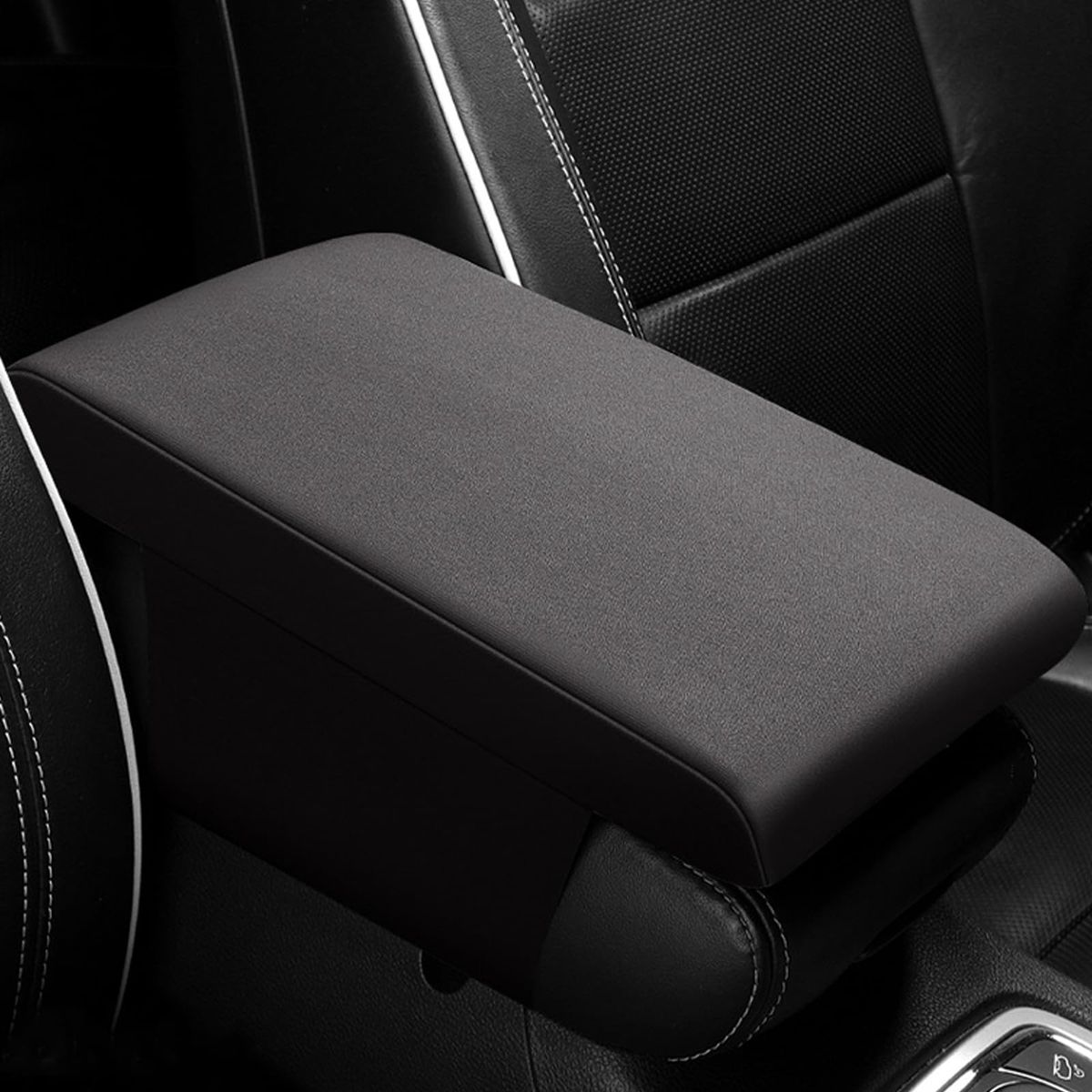
Our OEM polyurethane components are engineered to meet precise design, performance, and durability requirements across a wide range of industries. Developed through controlled moulding processes and advanced material formulations, these parts ensure accuracy, repeatability, and consistent mechanical performance in critical applications.
At Ambica Engineers, we partner with OEMs to manufacture customized components that integrate seamlessly into assemblies, delivering dependable strength, dimensional precision, and long-term reliability. Our solutions are tailored to meet exact specifications, ensuring production efficiency and product consistency.
We work closely with clients from concept to production, offering material selection, tooling support, and process optimization to achieve high-quality results across every manufacturing cycle.
Manufactured with tight dimensional tolerances to ensure accurate fit, alignment, and seamless integration into OEM assemblies.
Engineered formulations provide uniform density, strength, and durability across large-scale production runs.
Supports complex geometries, integrated features, and application-specific requirements through advanced moulding techniques.
Designed to withstand mechanical stress, vibration, and repeated usage in demanding operational environments.
Ensures reliable performance and shape retention under varying temperature and load conditions.
Optimized for scalable production with consistent quality, reducing variability and improving assembly efficiency.
Ambica Engineers manufactures high-performance OEM polyurethane components designed for precision applications across automotive, engineering, industrial, and equipment sectors. Our parts are developed through controlled moulding processes that ensure dimensional accuracy, consistent material behavior, and repeatable production quality.
We collaborate closely with OEMs to translate design requirements into durable components that integrate seamlessly into assemblies. From concept validation to batch manufacturing, our focus is on delivering engineered solutions that enhance product performance, reliability, and lifecycle value.
Experienced in polyurethane engineering and manufacturing.
Experienced in polyurethane engineering and manufacturing.
Focused on understanding application-specific requirements.
Polyurethane offers a unique balance of elasticity and structural strength, allowing it to handle both load-bearing and dynamic applications where conventional rubber may fatigue or creep. Elastomer research shows fatigue resistance in polymers depends heavily on microstructural behavior under cyclic strain, which directly affects crack growth and service life in automotive and industrial components.
For OEMs, this translates into:
Longer service life in suspension elements, mounts, rollers, and sealing systems
Higher dimensional stability under repeated mechanical loading
Ability to engineer hardness (durometer) without sacrificing resilience
This tunability makes polyurethane ideal for replacing metal-rubber assemblies with lighter, corrosion-free parts while maintaining mechanical reliability.
Advanced polymer composites demonstrate significantly enhanced energy dissipation due to internal shear deformation within the elastomeric matrix, which converts mechanical vibration into thermal energy.
In OEM applications, this results in:
Superior NVH (Noise, Vibration, Harshness) control in automotive and machinery systems
Reduced transmission of shock loads to adjacent assemblies
Better protection of precision equipment and structural interfaces
This damping behavior is why polyurethane is commonly selected for bushings, isolators, seating components, and protective structural parts.
Flexible polyurethane materials combine lightweight structure, durability, and comfort characteristics, leading to widespread adoption across automotive interiors, furniture systems, and engineered products where both strength and user interaction matter.
From an OEM manufacturing perspective, polyurethane enables:
Complex molded geometries without secondary fabrication
Weight reduction compared to metal assemblies
Consistent repeatability for high-volume production
Integration of comfort + structural performance in a single material
This multifunctionality reduces part count, simplifies supply chains, and improves lifecycle economics for OEM manufacturers.

We bring innovation and precision to every PUF foam project, delivering reliable solutions that ensure long-lasting performance and efficiency.